The following are a couple examples of lessons, activities, and presentations that I have created or borrowed and adapted to fit my students. I made sure to list the appropriate age range for each activity, as well as my sources if any were used.
The Introductory Presentation
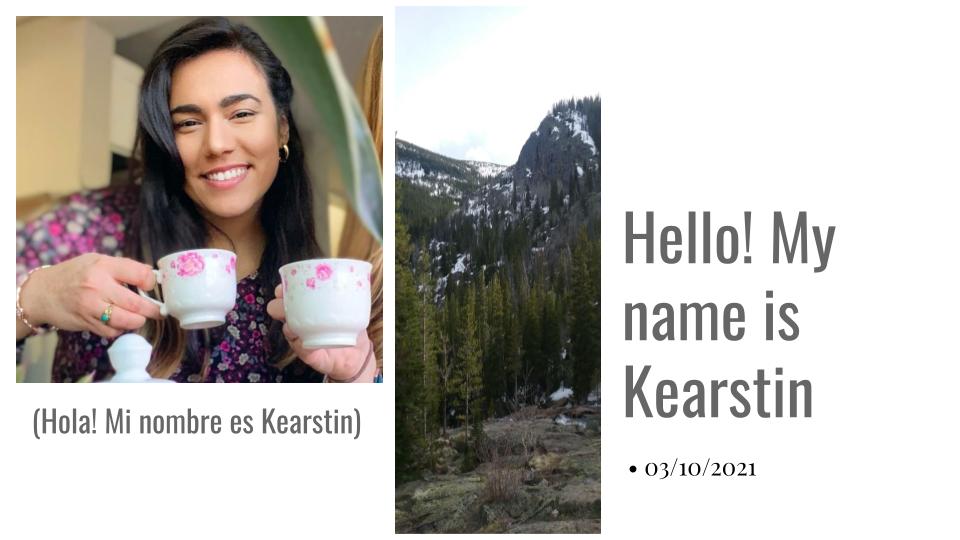
To begin my time as an Auxiliary in the Spanish classroom, I created an introductory presentation that let the students know who I am, where I come from, and a little bit more about me, such as my favorite color and the names of my pets. Depending on the age I was presenting to, I also included questions I had for the students, such as asking their favorite colors and animals. I left out these questions for the 3 year olds, instead using a “thumbs up, thumbs down” approach to their likes and dislikes based on the photos I was showing them. I was happy that the 3 year olds eventually turned this into saying, “Yes” and “No”, demonstrating to me that they were engaged in my presentation and had some English knowledge.
This activity was used for all of my classes (students aged 3 years-7 years).
You can download my presentation below or find it at this link.
Songs, Listening, and Vocabulary Comprehension Activities
Often time the beginning of the English lessons either with the main teachers or the traveling English teachers would involve an English song that the children would all sing together. This song, or songs, would be one or more of the following: “How’s the Weather Today?”, “The Days of the Week”, “Hello, How are You?”, “Hello Friends, How are You?”, and/or “BINGO”. Some of these songs I have found accompaniments with on YouTube, others I have just picked up from my fellow teachers or my memory from learning them when I was a child.
These songs are always accompanied by either a dance or hand motions to go along with the rhythm or vocabulary of the songs. For example, in the “Hello!” song when the students sing about being tired they mime laying their head on pillows, or for hungry they rub their bellies. It is with these movements that the songs and activities becomes more proactive and the students develop a firmer hold on the vocabulary.
Along with the motion-centered songs and the upbeat dances is the repetition of the activity. The students know it is the beginning of the English lesson when they see a member of our English lesson team and they quickly form a circle and we start with one of the songs. It is because of this repetition that the students know all of the words to these songs and are excited to sing along with us in English.
The age range for the songs listed above is 3 years-5 years. My first graders like more modern songs, such as ones from movies they watch at home.
After the every day songs comes the everyday activities. These can range from story time with English books, drawing/ coloring activities, to simple card games.
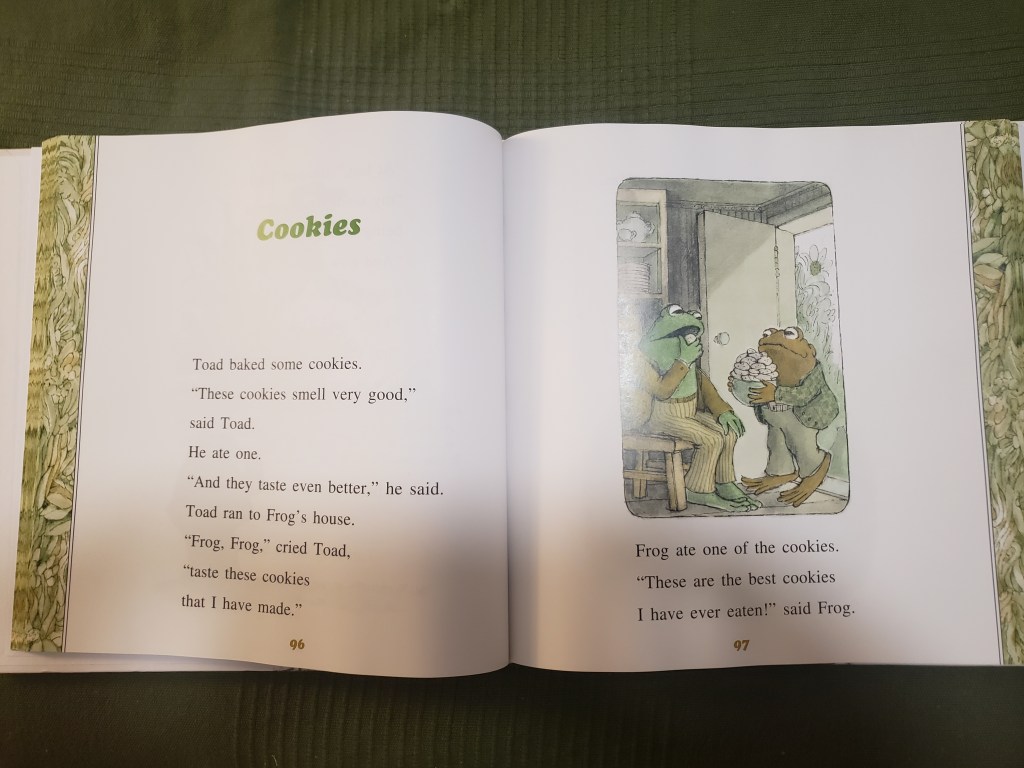
Frog and Toad stories are classics from the States that I was exposed to as a child. I remember loving the characters and the hijinks they would get into, and the students are equally as enthralled! The simple vocabulary along with the pictures makes the stories accessible and easy to follow. In the book that I brought over from the States, there are even stories that take place during common holidays that the students are familiar with or that wrap in with our current lesson.
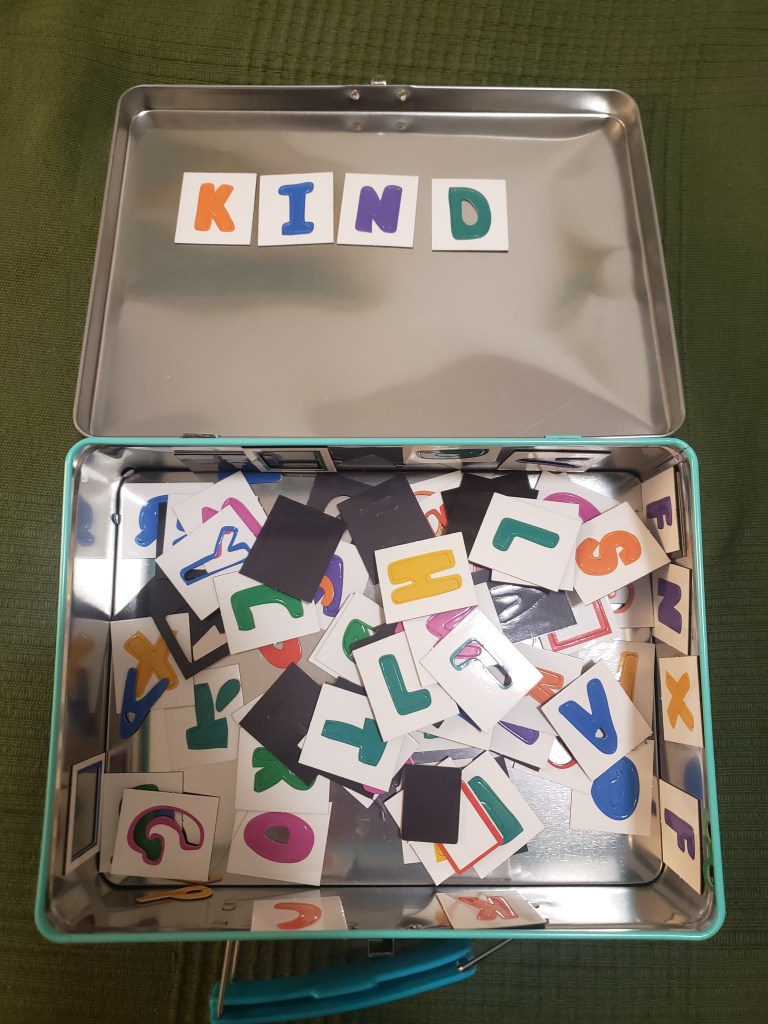
The above letters are used for more one on one lessons with the students who are learning how to read and see English words. Often times in large classes when students are playing games, the main teacher will ask me to take a small group of students into another class room for either some one on one time or small group time. Often with these letters I will go over spellings of English words, for example, I went over the spelling of numbers with first graders with this kit. In addition to these spelling reviews I would also bring along a basic deck of cards. With the first graders we would play Go Fish and work on numbers 1-10 in English, as well as the phrases: “Do you have a 10?”, “No”, “Go Fish!” These two activities are ones that I would always have on me, as well as a book. My days can sometimes be spontaneous and I have to think of an activity quickly on my feet. Having these learning tools with me at all times definitely came in handy more than once.
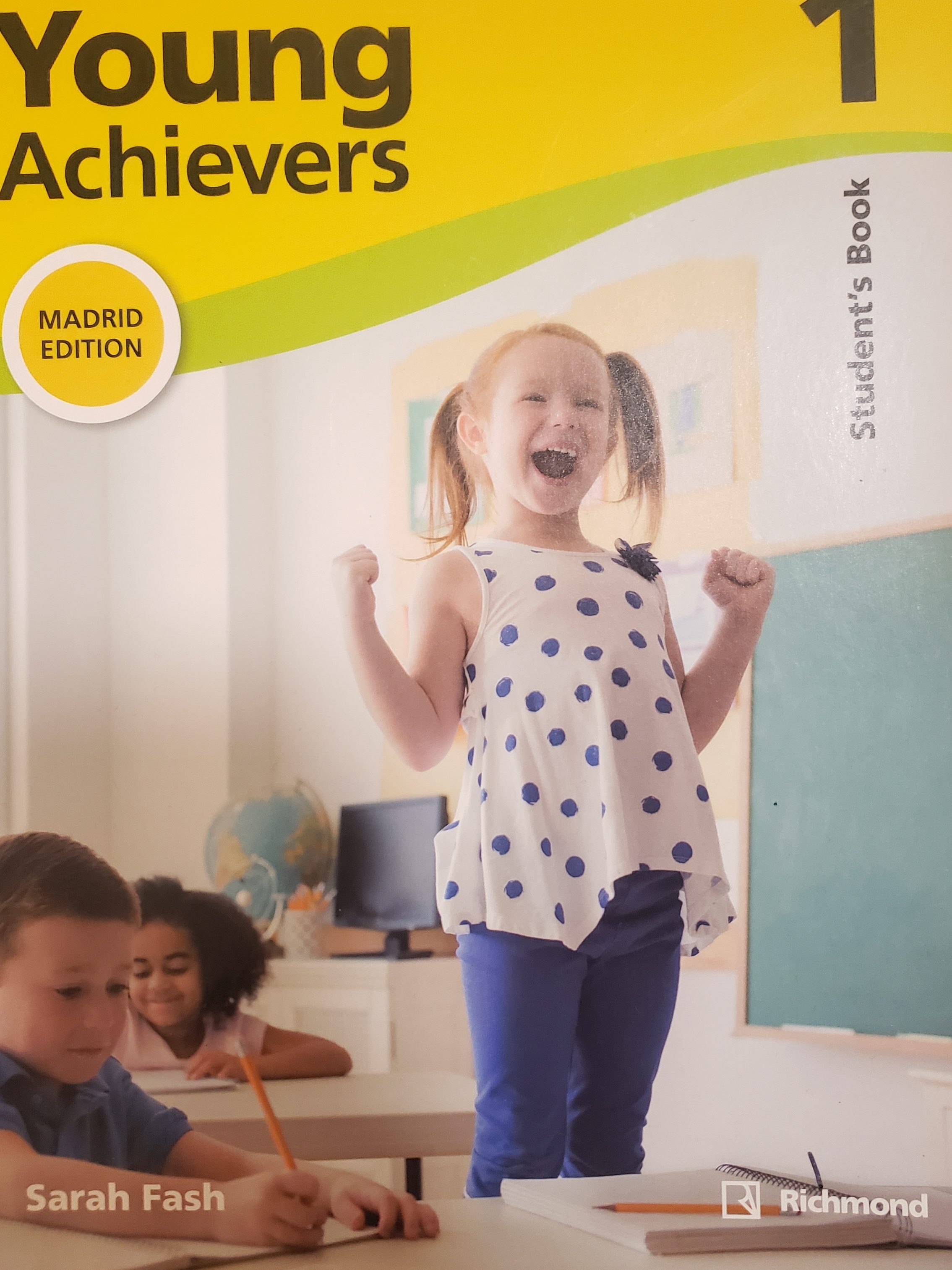
For my first graders this was the book the teachers gave me to help me create activities that supported the current lessons that the class was focusing on that week.
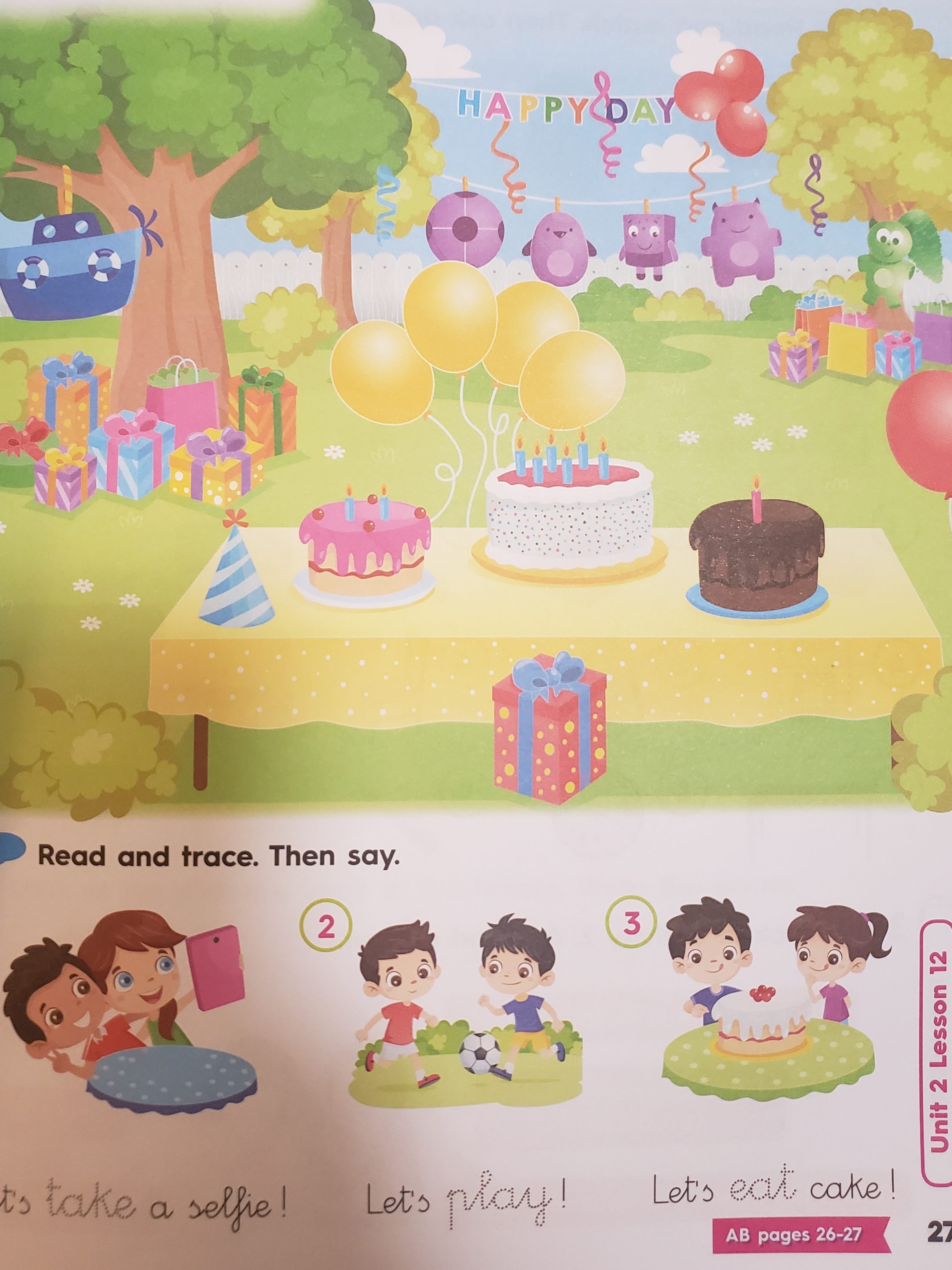
The class would take a whole week for a chapter. For example, the first graders had a week learning the vocabulary of a birthday. I would help the teacher carry out vocabulary recap and I helped her think of fun activities to use the vocabulary, such as memory games.
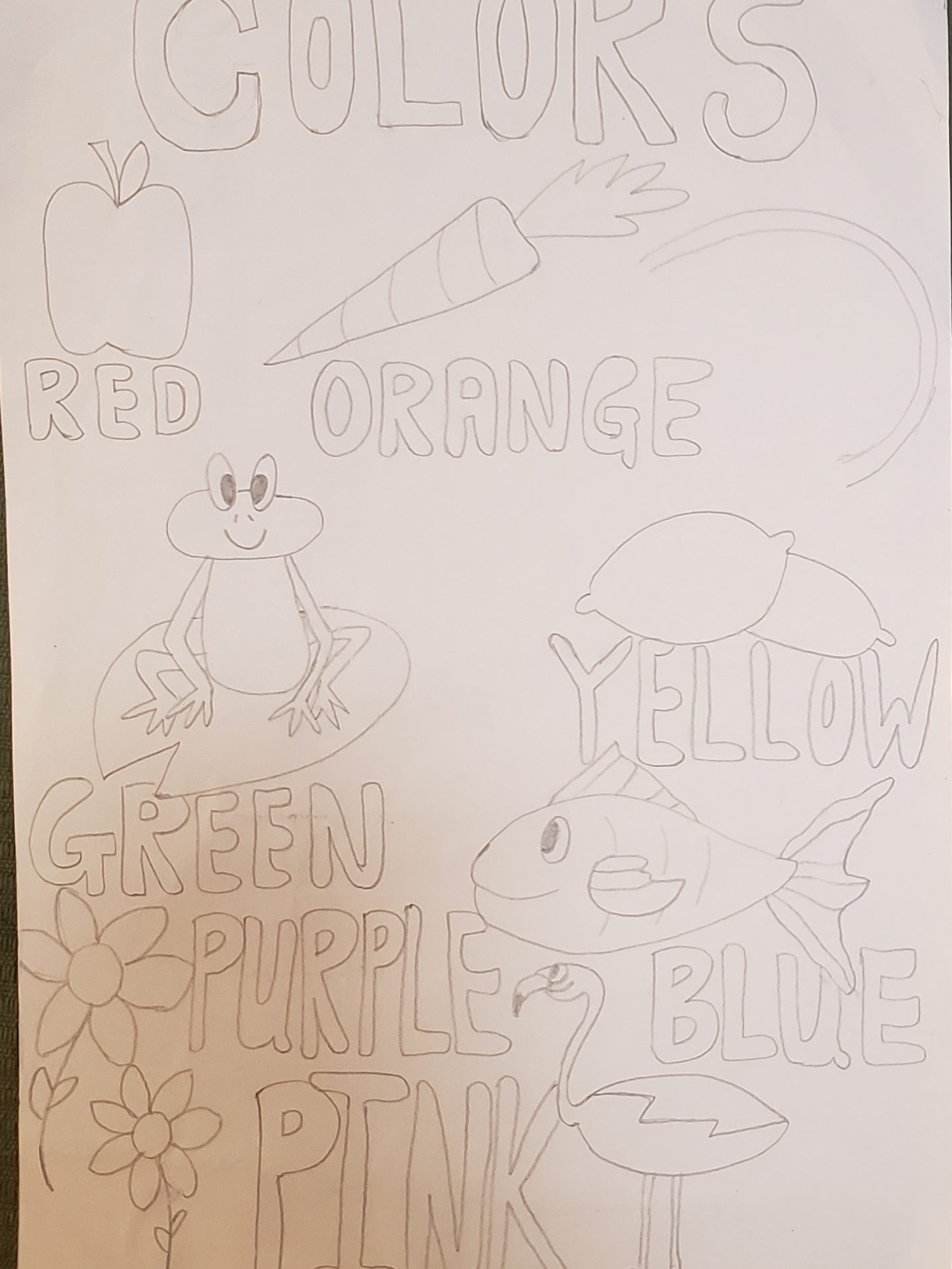
I really enjoy sketching and drawing, so for some lessons I would draw my own worksheets to assist with the assignments. The above example was used for the 4 years and the 5 years classes to help solidify their English color vocabulary.
All of the above listed activities I used for all age ranges. I had to always take into consideration the knowledge level of the classes ( I can’t play Go Fish with my 3 year olds) and the basic abilities of my classes (my 3 year old class can’t cut and paste a craft project). But, I never had any difficulties coming up with age appropriate activities for any of my classes.
Halloween Activities
Halloween is one of my favorite holidays and sharing it with my students was such a pleasure! During the days leading up to the holiday, my classes were practicing to perform a song and dance in front of their peers. It was called The Halloween Stomp.
This became a part of the student’s daily routine and soon they had it memorized and were singing and dancing without needing the video. The goal was to have them comfortable with it to be able to perform it in front of their classmates. This was a super fun activity to do because all of my infantile classes got to participate and dance together outside.
Myself and the other Auxiliaries in my school were in front of the whole school dancing to help the students follow along with the dance, while the teachers got to record to the students dancing so that the parents could watch their children perform. This was done because covid wouldn’t allow for the parents to watch in person. Unfortunately, I don’t have permission to share the videos, but imagine more than a hundred laughing students dressed in amazing costumes dancing along to the song above. It was a memory I will cherish forever.
In addition to this video was another song that the children became familiar with that involved more Halloween vocabulary.
The students really enjoyed learning new songs and vocabulary that were about Halloween. It was easy to find new songs and activities that went along with the songs thanks to the many valuable resources found online. I never had any problem finding coloring pages or even drawing a couple of my own for the students to have fun learning with.
Another valuable resource to note is the other Auxiliaries I was in communication with during this time. Many of us are on WhatsApp and it was through this app that we were able to communicate easily and share ideas with one another. The next learning tool I have to share is a PowerPoint that is something a couple of us Auxiliaries had a privilege to work on and share with everyone. I edited this one to suit my younger students, but I’m sure this PowerPoint could also be edited for older students, as well.
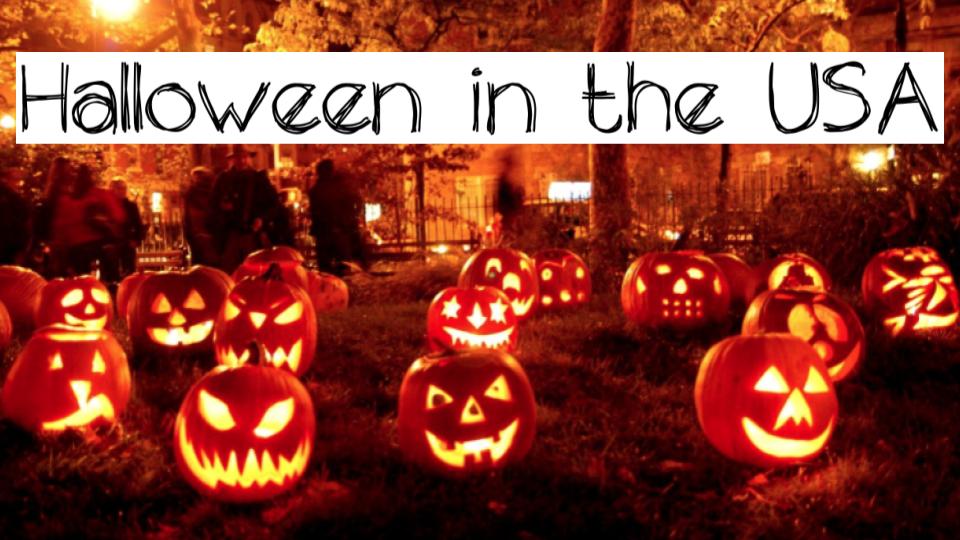
You can find the full PowerPoint here.
A game that I began with my students around this time is a Pictionary, of sorts. I use the vocabulary the students have been exposed to the most, primarily Halloween vocabulary, and I have the children get into pairs. I then pass out a worksheet that is very simple, with 6 boxes on one side numbered 1-6. Then, I list the pairs as teams on the board and tell the students to listen and draw. I write a vocabulary word on the board and repeat it aloud, and the students have to work together to draw the vocabulary word in the designated box provided. For example, I would write the word ‘PUMPKIN’ on the board and say, “Pumpkin, draw a pumpkin in box number one.” The students would then have 30 seconds to draw a pumpkin in box number 1. Once the timer is up, we say pencils down, and the teacher goes around telling me which team gets a point for drawing a pumpkin and which team does not get a point this round. I then mark the teams that gets points and we continue on to another vocabulary word. The students really loved this activity and the teachers and I had fun seeing their creative and competitive sides coming together. This activity is one that I used for each Holiday Vocabulary set that I had. The students enjoyed it and remained engaged with each set. I highly recommend it! Though, this activity would be too advanced for the 3 year old class.
Thanksgiving Activities
Thanksgiving activities were a bit interesting considering my age range and that most of my students had no idea what cranberry sauce was. I kept it very simple with my infantile classes and focused on the food and the thankfulness.
I made a PowerPoint about all of the food the United States eats on Thanksgiving and family traditions of thankfulness.
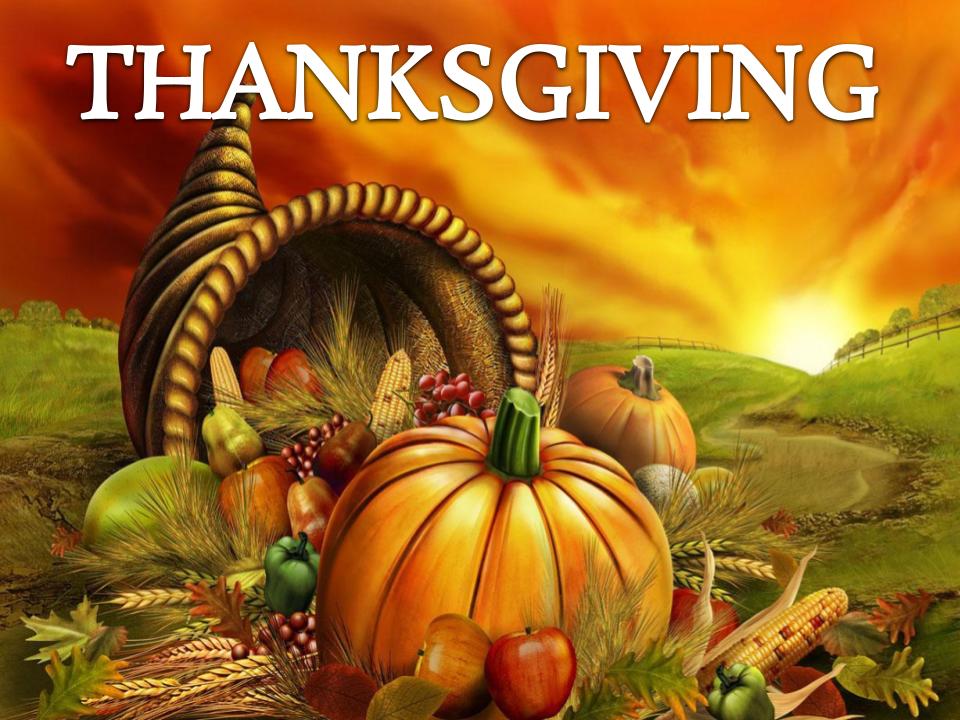
You can find the PowerPoint presentation here.
WHO HAS THE TURKEY FOR THANKSGIVING?
I created a version of, WHO TOOK THE COOKIE FROM THE COOKIE JAR? And made it Thanksgiving themed so the cookies were replaced with a turkey.
Here’s how you play:
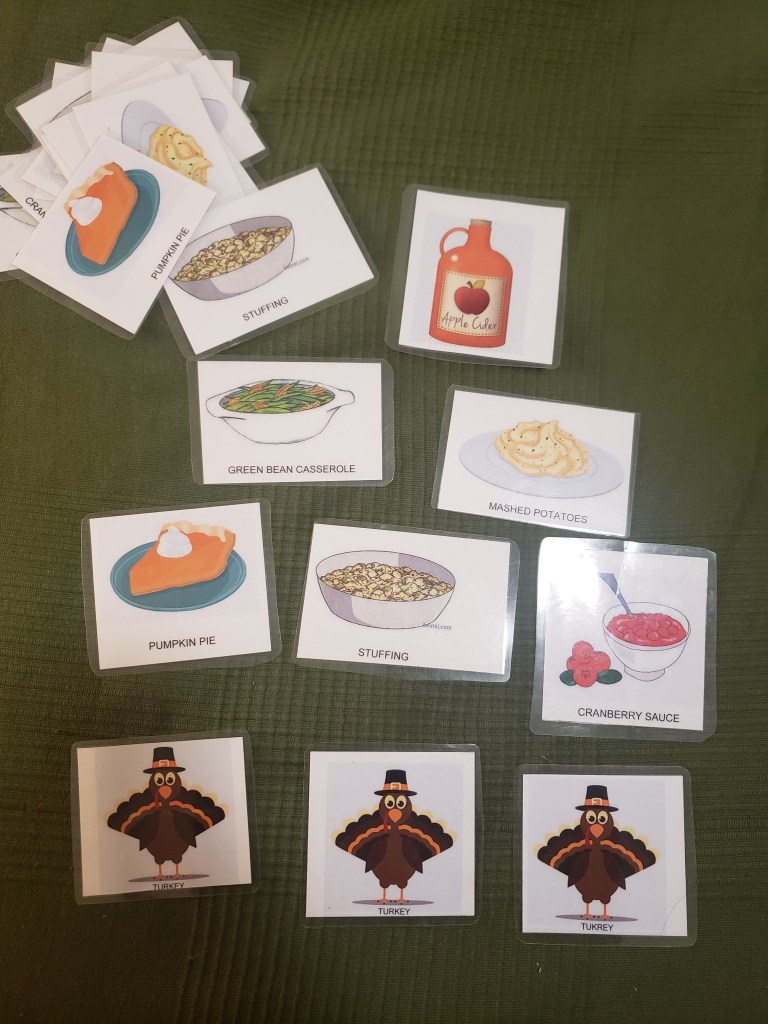
- I created a deck of flashcards that had American Thanksgiving food items on it, such as: stuffing, mashed potatoes, pumpkin pie, cranberry sauce, apple cider, green bean casserole, and turkey. Each card had a picture of the item as well as the name spelled clearly beneath it.
- The class is arranged to sit in a circle. I usually have the young students just sit on the floor with their legs crossed. The cards are then dealt out, one to each student, and they are told to keep their card secret and not to show their classmates. I make sure that at least 4 turkey cards are dealt out, but consider the size of your own class and adjust accordingly.
- The students then place the card face down in front of them, after looking at it themselves. The teacher then chooses a student at random to begin the song that everyone sings together. It goes: “Who has the turkey for Thanksgiving? Alex has the turkey for Thanksgiving!”
- Alex would then go, “Who me?” and the class would answer, “Yes you!” and Alex would either go, “I do!” If they have the turkey, or “Not me!”
- If “I do,” Alex would place his turkey card in the middle of the class and the song would continue once Alex guessed the next classmate to have a turkey. If, “Not me!” the class would respond, “Then who?” and Alex would say a name of another student to continue the song
- The song would then continue to include the next name as follows: “Who has the turkey for Thanksgiving? Santiago has the turkey for Thanksgiving!” And the song continues until all of the turkeys that were dealt are found and placed in the middle of the circle.
Note: While the students are singing, they are clapping their knees and then clapping their hands to keep a rhythm going with the song they are singing. It is in this way that kinesthetic, auditory, and visual learning methods are all combined for a prime teaching style.
Note: This game is for ages 3 years-7 years. An adjustment I made for the 7 year olds was in addition to saying, “Not me!” if they don’t have the turkey, they add: “I have the mashed potatoes!” This way they use the new food vocabulary they learned. Please note that this addition should only be used with this activity if the Thanksgiving presentation is used before it so that the students are exposed to the New vocabulary.
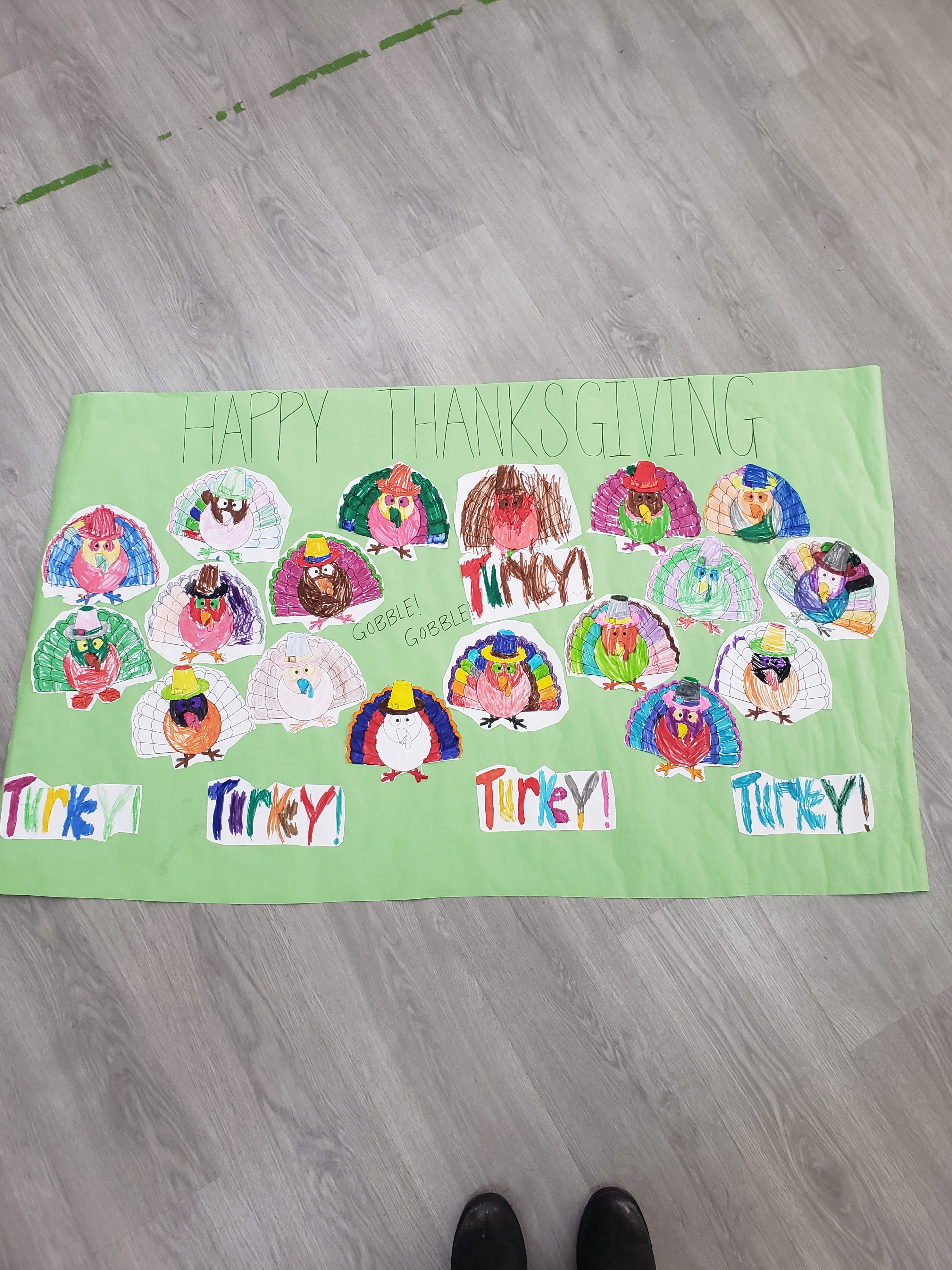
Coloring and crafts were also a huge part of celebrating Thanksgiving with my younger students and they had a lot of fun coloring, cutting, and pasting their turkeys together to make a nice Happy Thanksgiving Poster.
With my older students, I went over what it meant to be thankful of something and we made “I am thankful for…” leaves which they then used to decorate a tree that was hanging up in their hallway. Surprise, surprise many first graders are most thankful for their toys, but! A lot of them are also thankful for things like: water, cars, zebras, and teachers (yay!).
Christmas Activities
Christmas was a bit easier than Thanksgiving considering that all of my students knew what it was and why we celebrate it. They also were quite familiar with the vocabulary, even in English! This made my job very easy and allowed us to focus on more advanced games and fun challenges.
Just as with the other holidays, I had a PowerPoint for the vocabulary and a general introduction.

Christmas Vocabulary
You can download the PowerPoint below.
Just as I did with the Halloween vocabulary, I played the same Pictionary game with the Christmas vocabulary. This was especially fun because we got to use the more challenging vocabulary and because for most of the month of December the students were dressed up as reindeer, elves, or little Santa Clauses and it was really cute.
The songs and dances that accompanied this holiday were also in surplus. I offered up plenty of classics, such as Rudolph the Red-Nosed Reindeer, Frosty the Snowman, and Jingle Bells. The students were very familiar with the tunes of these songs, already, so it was easy to have them sing along with me with the English lyrics. For the Rudolph the Red-Nosed Reindeer song and dance I used the video below.
Also, similarly to Halloween, the students were meant to learn a song and dance that they were going to perform as a group and have recorded for their parents. This was the Christmas Twist and the song and dance is below.
Unfortunately, because of covid, the students didn’t get to perform this dance because the school closed a day early, but I hope that they performed it for their parents all the same because they worked really hard memorizing the dance and the lyrics.
I had two big projects of my own for this special time and they were reindeer hats and cookie ornaments. The reindeer hats I got offline from this amazing website called Simple Everyday Mom. Below is a picture of the craft and the link to the website where you can download the craft cutout.
![Reindeer Headband Craft For Christmas [Free Template]](https://www.simpleeverydaymom.com/wp-content/uploads/2019/10/reindeer-headband-craft-for-kindergarten-image-fb.jpg)
The kids had an absolute blast with this simple craft! I adored seeing their creativity and they wore their reindeer hats the rest of the day.
My final craft was the cookie ornament. This was something that I’ve always wanted to do with a class and I was so happy with how the ornaments turned out! The students were able to craft their own ornaments using cookie cutters in the shape of houses, angels, reindeer, and stars. Then, once the ornaments were dry, they were able to paint them and hang them on their Christmas tree or wherever they wanted to put them. This craft I did for all ages and was super fun and hands on. The young students were able to use their vocabulary that they had already known for Christmas time and flex their creativity with colors and shapes. The recipe for the craft is below along with a video of what the ornaments look like.
Recipe followed here.
My time as an Auxiliar looked a bit different because of Covid, but the activities and crafts that I did with my students were every bit as engaging and memorable as normal times. For my younger learners, songs and dances were the way to get them to be excited about my lessons and it was easy to compile a good collection of them from the amazing sources that I had on hand and my own memories of learning vocabulary growing up. Because of strict parents, I’m not able to show any photos of my students, but let it be known that they were smiling just as much as I was when we danced the Halloween stomp and carved out reindeer ornaments together. The activities I cultivated were made all the more rewarding because I got to share them with my amazing students.

This work is licensed under a Creative Commons Attribution-NonCommercial-ShareAlike 4.0 International License.
 a Wilde Explorer